Apps That Pay You to Track Daily Habits: What One Indian Scheme Pays
Apps that pay you to track and share daily habits exist mainly as research panels, not habit trackers. One published Indian scheme pays about ₹4.55 a day. Tracking needs your explicit permission.

By Jitendra Kumar Nirala, Founder · Updated 15 Nov 2026

Key takeaways
- Habit-tracker apps rarely pay cash. Paid tracking in India comes from research panels and paid studies that collect your data for a stated purpose.
- On Nielsen's published More panel scheme, passive tracking pays about ₹4.55 a day (as of November 2026): 50 points a day at 1,100 points = ₹100.
- Tracking should need your explicit permission and an easy exit. Run the six tests below before you install anything.
- A paid diary study asks for effort over several days, with the reward set by each study. Invitations depend on the study and your profile, and registering does not guarantee one.
In this article
- 1Do any apps really pay you to track and share daily habits in India?
- 2How much does one published passive tracking scheme pay in India?
- 3What does a tracking app collect, and is saying yes safe?
- 4How do you check a paid tracking app before you give permission?
- 5Is the reward written in rupees before you start?
- 6Does it list what it collects, item by item, and what it never collects?
- 7Is every permission tied to a stated purpose?
- 8Can you leave in one step, and does leaving stop collection?
- 9Who receives the data, and in what form?
- 10Does it ever ask you to pay, or for a bank password, card PIN or UPI PIN?
- 11How is a paid diary study different from always-on tracking?
- 12How do Qualfacto's paid diary studies and opt-in tracking work?
- 13What mistakes do people make when they get paid to share habits?
- 14Frequently asked questions
On one published Indian scheme, a year of background tracking is worth about ₹1,682 including the install bonus, by our calculation from Nielsen's published More panel points, as of November 2026. The sum uses 250 points for installation, 50 a day and 1,100 points to every ₹100, shown in full below.
The apps and studies that do pay are research projects, and what they pay for is access: to your phone, your routine and your permission. That changes the useful question. Before asking how much, ask what the project collects, why it needs it, how you leave and whether the reward is written down before you start. Those checks matter more than the headline reward, because a small reward in exchange for broad access is a trade you should choose knowingly.
We run a research participant panel ourselves, so we explain how our own diary and opt-in tracking studies work, and where they differ from always-on tracking.
How much does one published passive tracking scheme pay in India?
On Nielsen's published scheme for its More panel, daily tracking is worth 50 points, about ₹4.55 a day, or roughly ₹136 over 30 days. Passive tracking means an app records how you use your phone in the background while you get on with your day.
Nielsen's More panel page lists 250 points for app installation and registration, 50 points as a daily reward, and "1100 points = INR 100". Its FAQ says points are redeemed for gift vouchers. We use these figures as an illustrative published benchmark, not as a recommended route. Here is the sum, as of November 2026. It is our calculation from those published points.
Formula: (daily points × days + install bonus) ÷ 1,100 × ₹100. We assume every daily reward is credited and the app stays in use throughout.
| Period | Points | Rupee value |
|---|---|---|
| One day | 50 | about ₹4.55 |
| First 30 days, daily points only | 50 × 30 = 1,500 | about ₹136 |
| First 30 days plus install bonus | 1,500 + 250 = 1,750 | about ₹159 |
| First ₹100 reached | 250 + 50 × 17 = 1,100 | ₹100 on day 17 |
| First 365 days plus install bonus | 250 + 50 × 365 = 18,500 | about ₹1,682 |
At this rate, this scheme is a small bonus for a phone you already carry, not income. Rates change, so redo the sum with the figures the app shows you, and read its terms for redemption conditions before you rely on the total.
What does a tracking app collect, and is saying yes safe?
Whether saying yes is safe depends on three things you can read before installing: what is collected, who receives it and how you leave. Nielsen says its app sends anonymous data about smartphone use, that it "never collects the content of visited websites" and does "NOT collect user IDs, passwords, or other private information."
Nielsen's FAQ says none of your personal information or individual usage information will be shared with third parties for marketing purposes, and that data may also go to carefully selected third parties for services such as data analysis. It says you opt out by uninstalling the app. Specific inclusions, specific exclusions, named recipients and a stated exit are the details to look for.
Read privacy wording closely, because the same word can mean different things. Evidation's FAQ says: "We do not sell your personal information in a traditional sense, but some laws define 'sale' very broadly." In our view, a sentence like that is a prompt to read the full privacy notice, not a reassurance.
As of November 2026, India's Digital Personal Data Protection (DPDP) Act, 2023 is law, but the DPDP Rules, 2025 phase in over 18 months, and most duties on organisations and your rights to access and erase data apply from May 2027. Until then, rely on the app's own privacy notice.
How do you check a paid tracking app before you give permission?
Six tests decide whether a paid tracking app deserves your permission, and each has a clear pass or fail. Run them on the app's store page, its privacy notice and its first permission screens, before you tap Allow.
Is the reward written in rupees before you start?
Pass: the reward, payment method and timing are shown before you agree to take part in any study or install anything. Fail: "earn up to" with no rate, or a reward revealed only after you have started or finished the task.
Does it list what it collects, item by item, and what it never collects?
Pass: an itemised list of data, plus stated exclusions such as passwords. Fail: vague wording like "to improve our services" with nothing specific.
Is every permission tied to a stated purpose?
Pass: each permission has a plain-language reason, and optional ones can be declined without losing the rest of the study. Fail: the app demands broad access with no explanation. A passive tracking app needs wide access to your phone to work, so this screen deserves a slow read.
Can you leave in one step, and does leaving stop collection?
Pass: the notice says how to leave, and that leaving stops collection. Fail: no stated exit. Also check what deletion means. Evidation says that after you delete your account, data cannot be downloaded or recovered.
Who receives the data, and in what form?
Pass: the notice names the form (aggregated or individual) and the recipients, such as research clients only when a study requires it and has been explained to you. Fail: unnamed "partners", or a definition of "sale" you cannot follow.
Does it ever ask you to pay, or for a bank password, card PIN or UPI PIN?
Pass: never. Unified Payments Interface (UPI) is India's instant payment system, and no research app has a reason to know your UPI PIN. Fail: any fee to join, or any request for banking credentials. Close the app.
How is a paid diary study different from always-on tracking?
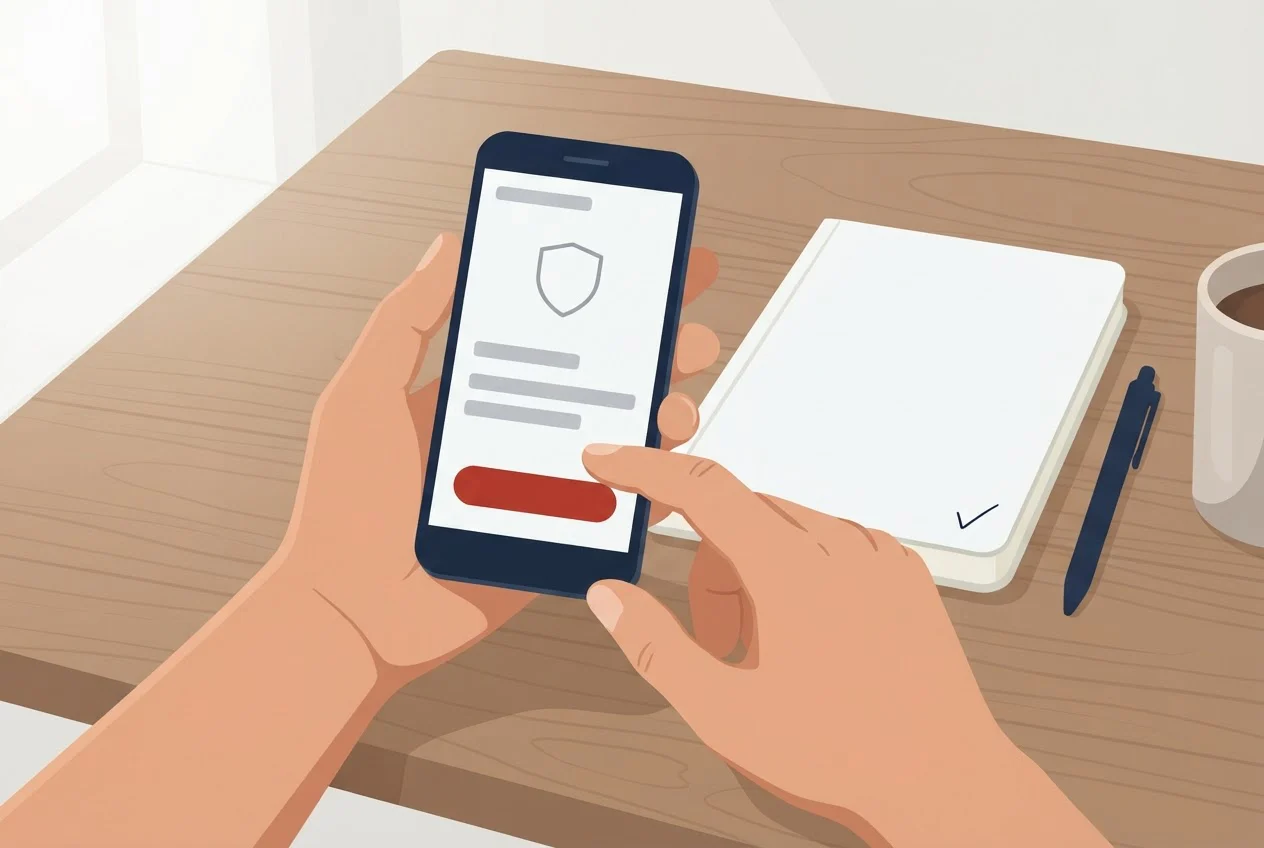
A diary study asks you to record specific moments over several days, while always-on tracking records in the background. The Nielsen Norman Group defines a diary study as "a qualitative user research method used to collect insights about user behaviors, activities, and experiences over time and in context." Qualitative research asks fewer people for richer detail.
Diary studies run from a few days to a month or longer. Participants log activities when something happens, at set times, or when prompted, and depending on the study, entries can be simple text or include screenshots and videos. Small ones often need only about 5 to 12 participants, and large discovery projects about 12 to 30 (Nielsen Norman Group guidance for UX discovery work). Our inference from that UX guidance, not a Qualfacto figure: with groups that small, each study invites only people whose profile fits, so most people on a panel will not be picked for any one study. If logging daily is not for you, other formats exist; what happens in a focus group discussion shows one.

How do Qualfacto's paid diary studies and opt-in tracking work?
We run diary studies and opt-in tracking studies as part of paid research. You register free, we match your profile to studies that need people like you, and the reward for each study is shared before you take part. Qualfacto is operated by Think Design Research Services.
- Create a profile.Share lifestyle, interests and experiences.
- Get matched and invited.Invitations depend on each study's requirements and your profile, and show the study details and reward.
- Take part.In a digital diary study you share photos, videos or short reflections over several days, on a mobile app or the web. Where a study needs it, you can share how you use a device, app or digital service, with your explicit permission.
- Receive your reward.Rewards are paid after validated participation. Rewards depend on the specific study and its participation terms, including payment method and timing.
A study has a brief, dates and a reward set in advance. There is no fixed number of invitations, and registering is an expression of interest, not a guarantee of selection. Studies may be run by us, research partners or other research organisations.
Our privacy policy (effective 22 August 2026) lists what we collect and why. Contact details let us run and pay for a study. Profile and demographic information, study preferences, eligibility answers and household information let us match you with suitable studies. Consent records show what you agreed to. An optional audio or video introduction is yours to provide or leave out. We share data with research clients only when a study requires it and we have explained it to you. We do not sell participant personal information. Joining is free, and you should never be asked to pay to register.
A genuine Qualfacto invitation describes the activity, the duration and the reward, and never asks for a fee, password or UPI PIN. If you are unsure about a message, write to support@qualfacto.io before replying.
Explore relevant research opportunities and register to be considered for suitable studies.
Register to be considered for paid research studies
Frequently asked questions
Email support@qualfacto.io with the subject "Qualfacto data deletion request". You can also decline a study, withdraw optional consent, or ask to see or correct your information. Some records may be kept for security, fraud prevention, payments, legal or compliance purposes.
Sources
- 1.Nielsen More panel: reward structure and data collection, Nielsen, read November 2026
- 2.Nielsen More panel FAQ, Nielsen
- 3.Evidation frequently asked questions, Evidation
- 4.Diary Studies, Nielsen Norman Group
- 5.The Digital Personal Data Protection Act, 2023, Ministry of Electronics and Information Technology, Government of India
- 6.Digital Personal Data Protection Rules, 2025, Press Information Bureau, Government of India
- 7.Qualfacto privacy policy, Qualfacto, effective 22 August 2026