How to Get Paid to Test New Apps and Gadgets in India
Paid app testing in India is occasional, per-study reward work.

By Jitendra Kumar Nirala, Founder · Updated 17 Nov 2026

Key takeaways
- Paid app testing in India is occasional, per-study reward work. In our worked example below, a test that looks like £30 an hour on paper works out to between £12 and £18.75 an hour once unpaid screeners are counted.
- Identify the type first: QA bug testing, usability testing and home product tests are real testing. Beta tests run directly by a developer and install-and-stay gigs are a favour to a developer, so agree payment first. “Get paid to play” reward apps are not testing.
- Never pay to join, and never share a bank or UPI (Unified Payments Interface) OTP (one-time password) or PIN (personal identification number). Run the five-point trust check on every offer.
- We run usability and app testing and in-home product testing as research participation. Joining is free, but registration does not guarantee selection.
In this article
- 1What kinds of paid app testing exist?
- 2How do you get paid to test new apps?
- 3Can you get paid to test gadgets before launch?
- 4What does paid app testing pay?
- 5What do platforms publish?
- 6What does it work out to per hour after unpaid screeners?
- 7Which mistakes and red flags should you avoid?
- 8The five-point trust check
- 9Install-and-stay Play Store gigs
- 10Where to report if money is lost
- 11Where does Qualfacto fit?
- 12How to recognise official Qualfacto messages
- 13Frequently asked questions
Paid app testing is occasional work, not a job, and most disappointment comes from signing up expecting a salary. A platform shows a reward, a time and a task. You finish it, and the next invitation may arrive next week or not at all.
That gap between hope and reality is where scams operate. Anyone promising a daily income for installing or rating apps is selling something other than testing.
If you want to get paid to test apps from home, three narrower questions matter. Which kind of testing is on offer? What is one test worth once unpaid screening time is counted? How can you check an offer is real before sharing anything? The sections below answer each one. They use published platform figures, a worked hourly calculation and a five-point trust check you can run on any offer.
We are Qualfacto, a research participation panel in India, so we also explain where our own studies fit.
What kinds of paid app testing exist?
Paid app testing covers three real kinds of testing, one favour to a developer and one imitation. A paid beta tester can be someone who reports bugs, someone who gives opinions on a product, or someone a developer needs to keep an app installed. Reward apps are a fifth category, and they are not testing.
| Type | What you do | How pay works | Does Qualfacto offer it? |
|---|---|---|---|
| QA bug testing (QA means quality assurance) | Use an app on your own phone and report defects | Often paid per bug or report, though models differ by platform. test.io's own page says you can get $50 for top bugs found | Not among the formats we run |
| Usability testing (think-aloud) | Use an app while saying out loud what you expect, notice and find confusing | Paid per test. TestingTime lists £10–£50 for usability tests | Listed among our formats |
| Developer-run beta tests | Install a developer's unreleased app and keep it for a set period | Agreed directly with the developer, so there is no published rate. Some exist to meet a Google Play rule (see the red flags section). Platform-run beta tests that state an incentive up front, such as BetaTesting's, fit the next row | Not among the formats we run |
| Home product tests | Use a product at home and share your experience. Some are blind product tests, where the brand is hidden | Paid per test. BetaTesting's own page gives $15–$30 as a common reward for a 45–60 minute test of its apps and devices | Listed among our formats |
| "Get paid to play" reward apps | Install, play or watch for small rewards | Rewards for your time, which promotes the app rather than tests it | We are built for research participation, not promotional advertising or bulk survey activity |
The row you are in decides everything else: how you are screened, how you are paid and what a scam looks like in that row. The steps below apply to the platform-based rows: QA bug testing, usability testing and home product tests.
How do you get paid to test new apps?
Six steps take you from searching for app testing jobs in India to a payout. Treat it as occasional paid research, not employment, because the invitation step is out of your hands.
- Check eligibility.Read the platform's own eligibility page for India before you register. Many list device minimums, such as a minimum Android or iOS version and a working microphone.
- Join free.Joining a genuine platform costs nothing. Treat any joining fee, deposit or "activation" charge as a stop sign.
- Complete the profile.
Fill in your devices, interests and shopping habits accurately. TestingTime says invitations vary with your profile and the studies running at the time, so a thin or inaccurate profile gets you fewer matches.
- Pass the screener.A screener is a short set of questions that decides whether you fit a study. It is unpaid. Answer truthfully.
- Test.Check the reward, the time and the task before you accept. In a think-aloud test, say what you are thinking as you use the app.
- Get paid.Payout method and timing are set by each platform: TestingTime pays by PayPal or bank transfer within about 10 business days.
Can you get paid to test gadgets before launch?
Sometimes, for connected hardware. BetaTesting’s own page says it tests devices such as smart vacuums, TVs and media devices, though it does not say whether they are unreleased. If you want to get paid to test new gadgets, expect few opportunities: the page states that most testers get 0–5 opportunities each month.
On our side, our site lists Technology & Smartphones among the research categories we run studies in, and in-home product testing among our formats.
Before you register anywhere hoping for an early gadget, run the trust check below. A fee to receive or "release" a gadget fails it. Whether you keep a gadget depends on the programme's own terms, so read them before you accept.

What does paid app testing pay?
Published rewards run from £5–£15 for TestingTime's basic tests to £10–£50 for its usability tests, and $50 for top bugs found at test.io. Your hourly rate depends as much on unpaid screening time as on the headline reward. Our guide to paid research formats, pay and safety covers the wider picture.
What do platforms publish?
These are the figures on each platform's own page, as of November 2026.
| Platform | Work | Published reward |
|---|---|---|
| Basic tests | £5–£15 per test | |
| Usability and detailed tests | £10–£50 per test | |
| Bug reports | $50 for top bugs found |
These are published in pounds and dollars, and we have not converted them. Check each platform's eligibility page for India, and which payout methods it supports, before you spend time on it.
What does it work out to per hour after unpaid screeners?
A £10 test that takes 20 minutes pays £30 an hour on paper. Under the assumptions below, it works out to £18.75 or £12 an hour once unpaid screeners are counted. This is our illustration, not a published rate.
Assumptions (all hypothetical):
- The paid test pays £10 and takes 20 minutes. £10 is the low end of TestingTime's £10–£50 usability range.
- Each unpaid screener takes 3 minutes.
- Case A: you qualify for 1 screener in 4. Case B: you qualify for 1 in 10.
| Measure | Paper rate | Case A (1 in 4) | Case B (1 in 10) |
|---|---|---|---|
| Unpaid screener time per paid test | 0 min | 4 × 3 = 12 min | 10 × 3 = 30 min |
| Total time | 20 min | 20 + 12 = 32 min | 20 + 30 = 50 min |
| Hourly rate | £10 ÷ 20 × 60 = £30 | £10 ÷ 32 × 60 = £18.75 | £10 ÷ 50 × 60 = £12 |
To check your own rate, divide your total unpaid screener minutes by the number of paid tests you completed, add the test length in minutes, then divide the reward by that total and multiply by 60 to get an hourly rate.
Which mistakes and red flags should you avoid?
The costliest mistake is paying a fee, or sharing a bank or UPI OTP or PIN, to get "testing" work. Real testing never needs either. This is the core of app testing scams: the work is a pretext for taking your money or your credentials.
Financial cyber fraud is widespread in India. According to the Ministry of Home Affairs’ National Cyber Crime Data release (PIB, 2026), the National Cyber Crime Reporting Portal received more than 65.89 lakh financial fraud complaints from 2021 to 2025, with more than ₹55,050 crore reported lost. These figures cover all financial cyber fraud, not testing offers alone, but they show why checking an offer first matters.
The five-point trust check
Run these five tests on any offer. One fail means stop.
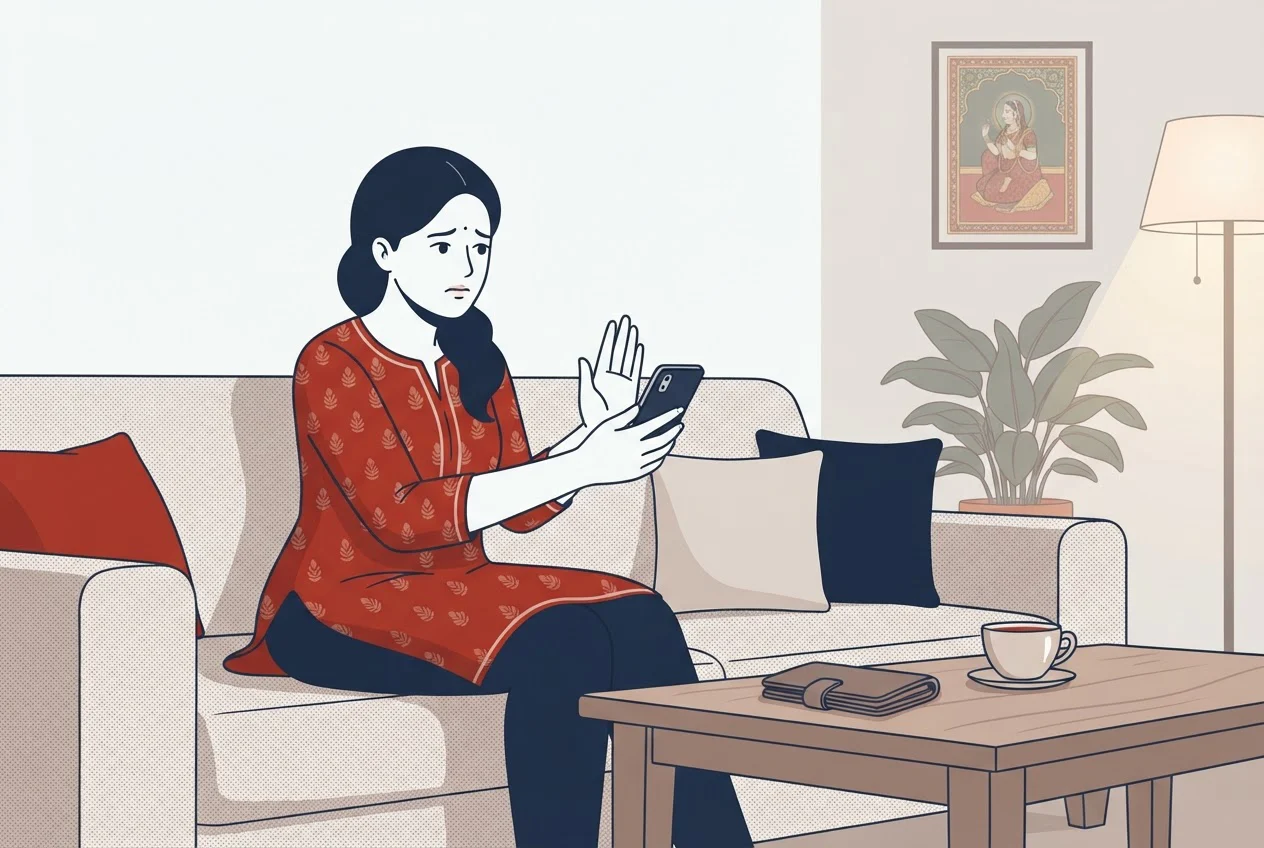
- Does it cost you anything?Pass: joining and testing are free. Fail: any fee, deposit, kit or "activation" charge.
- Does anyone ask for your bank or UPI OTP or PIN?
Pass: nobody asks. Fail: anyone does. NPCI, the National Payments Corporation of India, which runs UPI, says never to share your UPI PIN. You never need your UPI PIN to receive money, and a QR scan is only for paying.
- Is income promised?Pass: the reward is stated per study. Fail: a daily, weekly or monthly income is guaranteed. Platforms publish per-test rewards and no fixed income.
- Can you see the reward, time and task before you start?Pass: yes. Fail: you are told details only after you start.
- Does the work match a row in the types table?Pass: you are asked for bugs or opinions on a product. Fail: the task is only installing, rating or liking; if it is a developer's install-and-stay request, agree the payment before you install.
Install-and-stay Play Store gigs
Developers advertise "install and stay" tester gigs because of a Google rule. Personal developer accounts created after 13 November 2023 must run a closed test with at least 12 testers opted in continuously for at least 14 days, according to Google Play Console Help. A tester who opts out before 14 days does not count.
That makes such a gig a favour to a developer, not research. If you take one, agree the payment before you install. Never pay to be added to a tester group.
Where to report if money is lost
For UPI or bank fraud, call the national helpline 1930 and file a complaint at cybercrime.gov.in. Type that address into your browser yourself instead of tapping a link in a message.
The portal is part of the Indian Cyber Crime Coordination Centre (I4C) under the Ministry of Home Affairs, as the National Cyber Crime Data release (PIB, 2026) explains. Act as soon as you notice.
Where does Qualfacto fit?
We are a research participation panel in India. We connect people with paid qualitative market research studies. We are not a bug-bounty or QA platform.
Usability and app testing is one of our formats: you try an app, website or digital experience and share what feels easy, confusing or useful, in remote or lab-based sessions. We also run in-home product testing. Studies may be run by us, by research partners or by other research organisations, depending on the project.
Joining is free. Registration does not guarantee selection or any invitation, because invitations depend on each project's requirements and your profile. The real steps are:
- A verification code on WhatsApp.
- A profile of about 5 minutes, including household details.
- A 30–60 second video introduction.
- Email verification.
Studies stay locked until the introduction passes and your email is verified. Rewards, eligibility and timelines depend on the specific study and its participation terms, and the details are shared before you take part.
Applying the trust check to us: joining is free, reward details are shared before you take part, there is no fixed number of invitations, and our support address is support@qualfacto.io. If that suits you, you can join the Qualfacto panel for free, knowing selection is not guaranteed.
How to recognise official Qualfacto messages
- The verification code is sent to the WhatsApp number you register, and you enter it on the Qualfacto sign-in page.
- Joining is free, and nobody should ask you to pay.
- The only contact address our site lists is support@qualfacto.io.
Conclusion
Treat paid app testing as occasional, per-study work. Before you sign up anywhere, use one rule: if any point of the five-point check fails, stop. In the next 24 hours, read one platform’s eligibility page for India, check its payout method, and compare its device list with your phone. Then time your next three screeners, to see what a paid test really works out to per hour.
Remember the common trap: an offer that promises quick income while asking for a fee, or a bank or UPI OTP or PIN, is a warning sign.
If you would like to be considered for our usability, app and home product studies, join the panel for free. Selection is not guaranteed, and each study’s reward details are shared before you take part.
Register to be considered for paid research studies
Frequently asked questions
Yes, when it is real testing and costs you nothing. Platforms such as TestingTime publish rewards and payout methods. Fake offers ask for fees or a bank or UPI OTP or PIN. Some paid research is a conversation, not a test: see getting paid for one-on-one video calls in India.
Sources
- 1.TestingTime: Get paid to test
- 2.test.io: Become a tester
- 3.BetaTesting: Beta testers
- 4.Google Play Console Help: closed testing requirement for new personal developer accounts
- 5.NPCI: Unified Payments Interface Safety Shield
- 6.Indian Cybercrime Coordination Centre (I4C): National Cybercrime Reporting Portal
- 7.Qualfacto