Informed Consent in Research: A Form and the Indian Rules
Informed consent in research is a participant's voluntary agreement to take part after understanding the purpose, risks, payment, recording, data use and right to withdraw, with a written or recorded record.

By Jitendra Kumar Nirala, Founder · Updated 9 Oct 2026
Key takeaways
- 01Give each choice its own box, set a dated withdrawal window, and state how long you keep recordings, transcripts and contact details. These three changes close the most common gaps.
- 02A signature records a click. A one-minute summary at the top, the participant's own language, and a spoken "say it back" check show whether the form worked.
- 03In a spot check of four published forms, payment was missing from two and only one named the client as a recipient of personal information. Commercial forms need both.
- 04In India, treat a paid study as covered by the DPDP Act. Its notice and consent duties apply from 13 May 2027, so build the notice into your form now.
In this article
- 1What must a consent form contain for informed consent in research?
- 2What did four published interview and focus-group consent forms leave out?
- 3Can a participant withdraw from a study at any time?
- 4Why does a signed consent form often fail?
- 5What does Indian law require for consent in research?
- 6What does a consent form for a paid interview in India look like?
- 7How do you test a consent form before fieldwork?
- 8How do we handle consent at Qualfacto?
- 9Frequently asked questions
A 2024 analysis of consent-form timing data from 1,283 communication-research participants found an average of 35.4 seconds on the consent document, too short to read forms averaging about 550 words (Taylor & Francis). A signature shows that someone clicked or signed. Informed consent shows they understood what they agreed to, which makes it a design problem as much as a legal one.
Most guidance was written for hospitals and university ethics boards abroad. A paid interview or focus group in India differs: a client sits behind the study, sessions run in regional languages, recordings travel between teams, and the Digital Personal Data Protection (DPDP) Act, 2023 starts binding most businesses in May 2027.
The decision most forms get wrong is promising withdrawal at any time. A participant can leave a session whenever they like, but a promise to remove their words from a finished report cannot always be kept, and a broken promise is what turns a complaint into a dispute.
What must a consent form contain for informed consent in research?
A consent form must state the purpose, procedures and duration, any risks or benefits, payment, what is recorded and who sees it, how long data is kept, how to stop or withdraw, and whom to contact. Participation must be voluntary, and the explanation must be understandable.
For health research in India, the Indian Council of Medical Research (ICMR) sets the benchmark. Its 2017 national ethical guidelines call for a statement that this is research, the purpose and methods, duration, expected benefits, foreseeable risks, confidentiality of records, reimbursement and compensation for injury. They govern biomedical and health research, not commercial market research.
For market research, the ICC/ESOMAR Code is the benchmark. ESOMAR is the global association for market, opinion and social research, and the code is co-published with the International Chamber of Commerce. Under its Article 4, participation must be voluntary and based on clear, accurate information given at the start, any re-contact needs the participant's agreement, and researchers must state how long and for what purpose personal data is kept. Under Article 6, personal data goes to a client only if the participant consented to that specific purpose and transfer.
The United States' Common Rule (the federal regulation for research with people) adds a useful structural rule: begin with a concise summary of key information. Any form benefits from that.
What did four published interview and focus-group consent forms leave out?
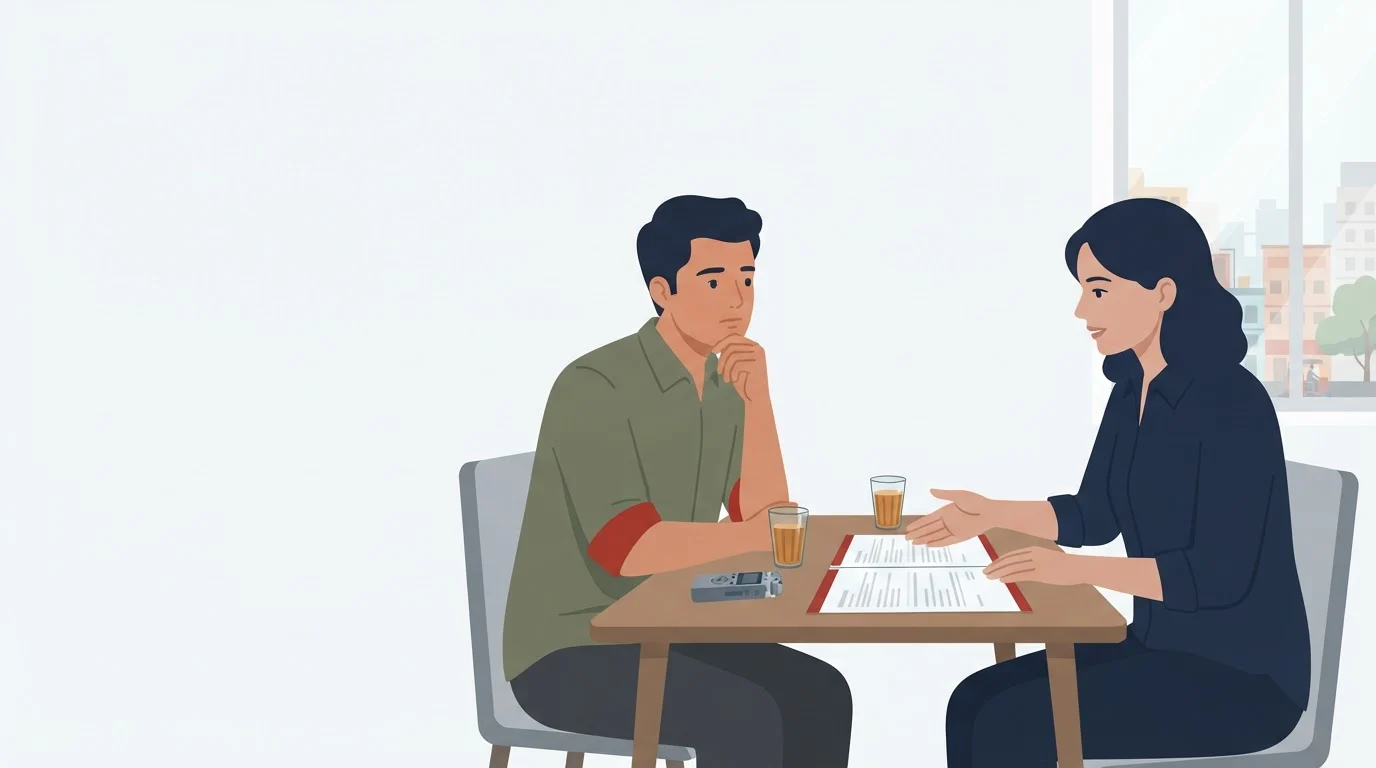
In a spot check of four published forms (our coding, October 2026), the most common gaps were payment (missing from two), third-party recipients (named by only one) and, in the commercial form, retention and withdrawal. Four forms are a spot check, not a measure of what most forms do.
We compared the MIT interview template, a Strathclyde University focus-group form, a Warwick interview form and a commercial market-research focus-group consent. We read each against twelve elements and report the five that differ most. Qualfacto publishes this page, and none of our own documents was among the four.
| What the form states | MIT template | Strathclyde focus group | Warwick interview | Commercial focus group |
|---|---|---|---|---|
| Payment | Prompt in template | No | No | Yes |
| Recording permission asked separately | Yes | Yes | Yes | No |
| Retention period (how long data is kept) | Placeholder in template | Yes | Yes | No |
| Withdrawal and its effect on data | Yes | Yes, seven days | Yes, one week | No |
| Third parties named (people outside the research team, such as clients) | Partly | Partly | No | Yes |
Three of four forms explain withdrawal and what happens to data; two state a retention period outright. The commercial form has neither. None was written for India, so none carries a notice of the kind the Indian law expects. Retention and withdrawal are the items an Indian notice must cover, and they lead to the hardest decision: what to promise about withdrawal.
Can a participant withdraw from a study at any time?
A participant can stop a session at any time, but withdrawing their data only works until analysis begins, so a form should set a dated window. The ICC/ESOMAR Code reflects this: participants may withdraw at any time, and their data is deleted where that is technically and operationally feasible and does not compromise the integrity of results already analysed (Article 4(c)).
The academic forms show the fix. The Warwick form allows withdrawal up to one week after collection. The Strathclyde form allows seven days and admits that in a group interview removal "is not always possible".
Our recommendation is a window that closes before analysis starts, for example seven days after the session, the length those two forms use. Seven days leaves room for second thoughts and is short enough that nothing has been merged into a report. Check it against your own timeline. Then state four separate things:
- Stopping the session is always allowed, with the payment rule stated up front.
- Deleting the recording and answers is possible until the window closes.
- Removing quotes stays possible from future outputs, but not from a report already delivered.
- Future contact is a separate choice that can be withdrawn at any time.
Two wording points prevent most disputes. Use "confidential", not "anonymous", for interviews, because the researcher knows who the participant is. In group sessions, say plainly that other participants may repeat what they hear, because you cannot guarantee they will not.
Keep recording, client viewing and quotes as separate tick-boxes. Ask once, in the form, because asking again at the start of a session pressures people who have already declined.
Why does a signed consent form often fail?
A signed consent form often fails because the participant did not read or understand it, so the signature records a click, not comprehension. The timing study cited in the introduction shows how quickly people sign.
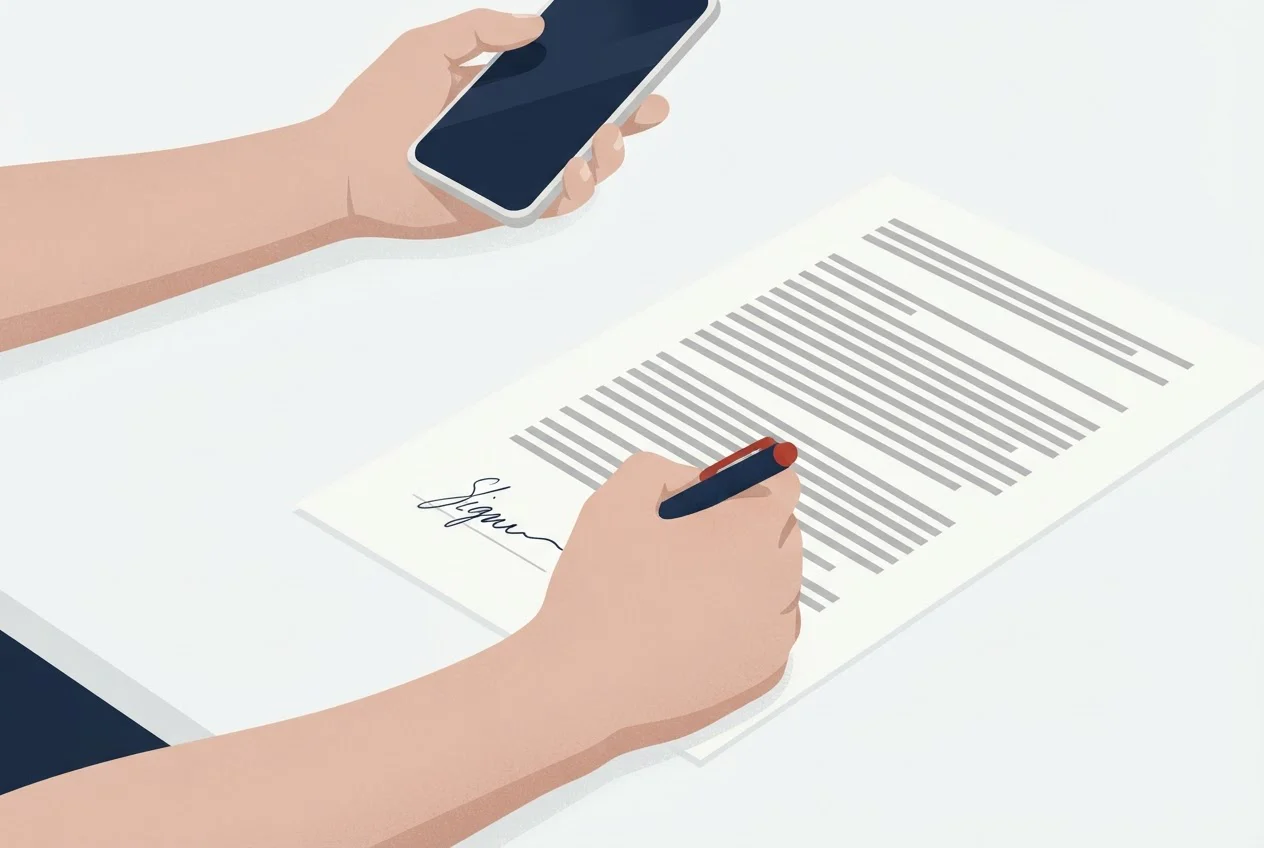
In India, language and legal literacy compound this. A survey of 428 Indian internet users (Athar et al., ASIA CCS 2026) found uneven awareness of the DPDP Act even in a sample skewed towards educated, digitally active respondents (arXiv). Our recommendation is a notice that assumes no legal knowledge.
What we recommend for the moment of choice:
- Put a one-minute summary at the top, before any detail.
- Write the form in the participant's language, checked by a native speaker, and offer to read it aloud. The Act allows notices in English or any language in the Eighth Schedule (the Constitution's list of 22 recognised languages).
- Ask the participant to say back what is recorded, who sees it, and how to stop. This takes under a minute and shows whether the form worked.
- Give a copy to keep.
What does Indian law require for consent in research?
Under the Digital Personal Data Protection Act, 2023, consent must be free, specific, informed, unconditional and unambiguous, given by a clear affirmative action, and limited to the data needed for the stated purpose. These are our summary points, not legal advice.
- Section 5, notice. The request must come with a notice describing the personal data, the purpose, how to withdraw consent, and how to complain to the Data Protection Board of India (the regulator under the Act). Section 5(3) allows the notice in English or any Eighth Schedule language. Rule 3 of the Rules sets out the notice in more detail.
- Section 6, consent. Withdrawing consent must be as easy as giving it.
- Section 9, children. For anyone under 18, a parent's or guardian's verifiable consent is required.
The Rules took effect in phases from 13 November 2025: the Board at once, consent-manager registration on 13 November 2026, and notice, consent and data principal (the person the data is about) rights duties on 13 May 2027 (Press Information Bureau).
Section 17(2)(b) exempts some research and statistical processing, but only where the data is not used to take decisions about the individual and the Rules' standards are met. Our recommendation is not to rely on it for a paid study with named participants, contact details and a client behind it. Treat the study as covered.
On oral consent, the ICMR guidelines allow verbal consent in health research, with approval from an ethics committee (an independent panel that reviews research), when a participant is willing to take part but cannot or will not sign. An impartial witness signs the record. Where the participant cannot read, an impartial literate witness must be present throughout. For a paid interview, our recommendation is to read the statement aloud, ask for a yes to each choice, and keep a record.
What does a consent form for a paid interview in India look like?
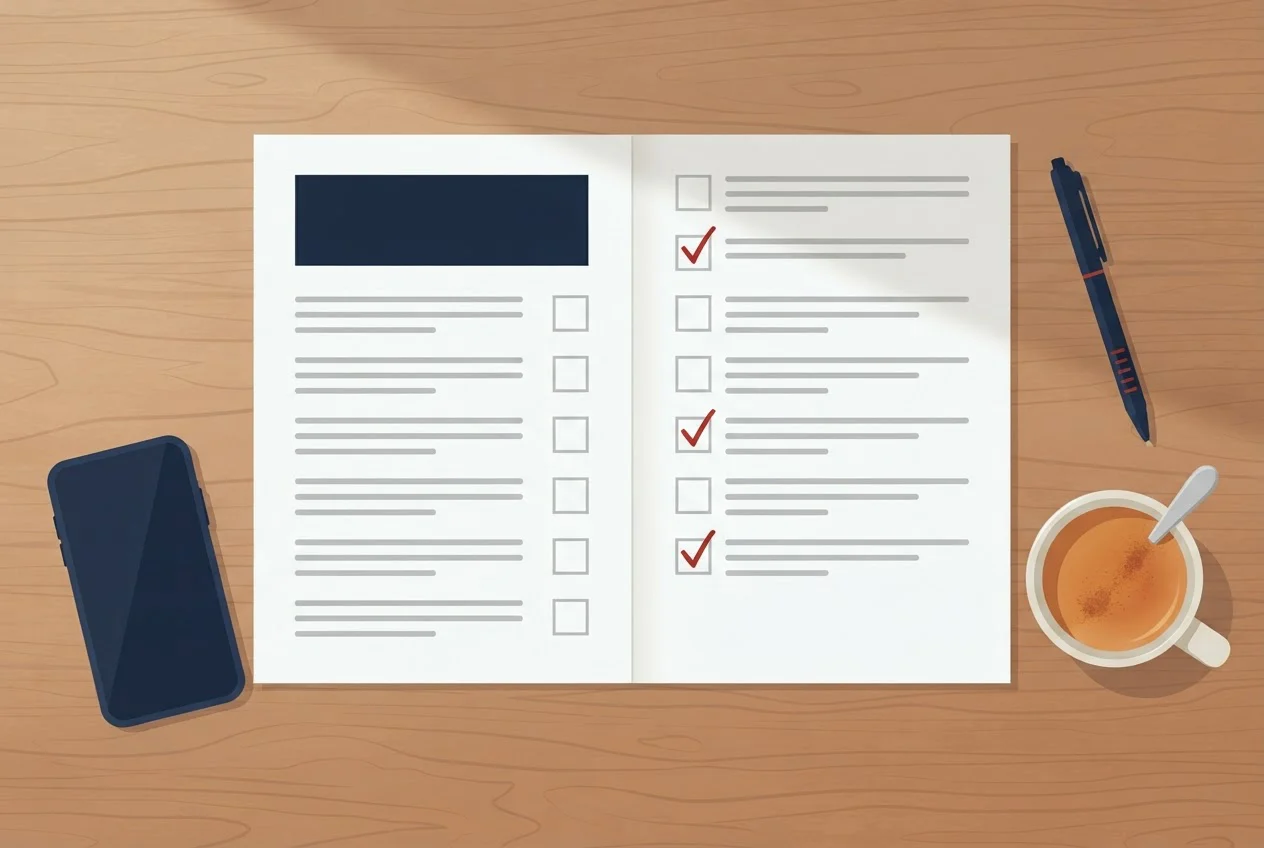
A good form fits on two pages, starts with a one-minute summary and gives every choice its own box. Adapt the template below, replacing the bracketed parts, and have a lawyer review it before use.
Consent to take part in a research interview
In one minute. [Firm name] is running a study for [type of client, for example a consumer brand] about [topic]. You will [take part in an interview/group discussion/product test] for about [minutes] in [language]. You will receive ₹[amount] by [method] within [days] of finishing. You can skip any question and stop at any time. [State whether payment is made in full, in part or not at all if you stop early.]
Your choices. Tick each one you agree to. Saying no to any of them does not remove you from the study.
- ☐ Record audio
- ☐ Record video
- ☐ Record my screen
- ☐ Let the client team watch live or watch the recording
- ☐ Quote my words in reports, with my name removed
- ☐ Contact me about future studies
What we collect and why. [List each type of personal data] for [purpose]. We use it only for this study.
Who sees it. [Moderator, transcriber, client team by role]. [State where it is stored and whether it leaves India.]
How long we keep it. Recording: [period]. Transcript: [period]. Contact details: [period].
Stopping and withdrawing. You can stop the session at any time. You can ask us to delete your recording and answers until [date, for example seven days after the session]. After that date we can still remove your quotes from future reports, but we may not be able to remove your words from a report already delivered.
Group sessions. We ask everyone to keep what is said private, but we cannot guarantee that other participants will.
Your rights. You can ask to see, correct or delete your information, or withdraw any choice above, as easily as you gave it. Contact [name, email, phone]. If we cannot resolve a complaint, you can complain to the Data Protection Board of India.
Under 18. A parent or guardian must also give consent: [how it is verified].
Language. This form is in [language]. We can read it aloud and answer questions first.
Name and signature (or recorded spoken agreement), date.
How do you test a consent form before fieldwork?
Run eight checks, each with a clear pass or fail. These thresholds are our recommendations.
Can a stranger answer the summary test?
A colleague outside the project reads only the one-minute summary and states the pay, what is recorded and how to stop, within a minute. Pass if all three are right. Fail if any is wrong.
Can a participant decline each option and still take part?
Untick every optional box. Pass if the form still allows participation and payment. Fail if declining recording or client viewing ends the session.
Does the form give a dated withdrawal window?
Pass if it shows a date or number of days and says what happens after it. Fail if it says only "at any time".
Does it state a retention period for each type of data?
Pass only if recording, transcript and contact details each show a period in days or months. Fail on "as long as needed".
Does it name who sees the data?
Pass if it names the moderator, transcriber, client team by role and the storage location. Fail if "third parties" is the only description.
Has a native speaker checked the participant's language version?
Pass if a native speaker has reviewed and signed off the translation. Fail if it is an unchecked machine translation.
Does a named person answer complaints?
Pass if a named person replies within seven days. Fail if only a generic mailbox appears.
Can the participant say it back?
Ask the participant to state what is recorded, who sees it and how to stop. Pass if all three are right. Fail if not, and revise the form before the next session.
How do we handle consent at Qualfacto?
At Qualfacto we recruit participants for paid qualitative studies across India, and participants see the reward before a study. We manage recruitment and participant engagement, including screening and coordination as the study requires, and we assess language needs project by project.
A participant's details go to a research client only when the study requires it and we have explained it to them. Participants can decline a study, withdraw optional consent, and ask to see, correct or delete their information, as set out in our privacy policy. Our guides on paid research studies in India and how to recruit participants for a study in India explain formats, pay and sourcing. We can discuss a pilot for a first project.
Recruit participants for your next study in India
Frequently asked questions
Sources
- 1.Words, words, words: participants do not read consent forms in communication research, Taylor & Francis, 2024
- 2.Digital Personal Data Protection Act, 2023, Ministry of Electronics and Information Technology
- 3.Digital Personal Data Protection Rules, 2025, Press Information Bureau
- 4.Government notifies DPDP Rules, Press Information Bureau
- 5.ICMR National Ethical Guidelines for Biomedical and Health Research Involving Human Participants, 2017
- 6.ICC/ESOMAR International Code on Market, Opinion and Social Research and Data Analytics, 2025
- 7.45 CFR 46.116, general requirements for informed consent, US eCFR
- 8.MIT consent to participate in interview template, June 2022
- 9.University of Strathclyde focus group information sheet and consent form
- 10.University of Warwick interview consent form
- 11.Strategic Research focus group consent
- 12."Nobody should control the end user": Exploring privacy perspectives of Indian internet users in light of DPDPA (Athar et al., ASIA CCS 2026; arXiv preprint)
- 13.Qualfacto privacy policy