In-Depth Interview Method: How to Plan, Size and Brief One
The in-depth interview method is a one-to-one, open-ended conversation with a researcher. For one uniform audience and a narrow question, plan nine to seventeen interviews of 45 to 60 minutes each.

By Jitendra Kumar Nirala, Founder · Updated 10 Oct 2026

Key takeaways
- 01Plan 9 to 17 interviews of 45 to 60 minutes for each distinct, fairly uniform audience with a narrow question. Loose guides or mixed audiences can need 15 to 23, or 30 and more.
- 02Choose an in-depth interview (IDI) for individual reasons, decisions and sensitive topics. It cannot tell you how many people think something.
- 03Ask about specific past events, one question at a time. Hypothetical, leading and compound questions weaken the data.
- 04Write a brief before recruiting, and agree consent, recording and incentive terms with participants in writing before the session.
In this article
- 1What is the in-depth interview method, and when should you use it?
- 2How many in-depth interviews does one study need?
- 3Which questions weaken an IDI guide, and how do you rewrite them?
- 4What should a brief to a recruiter contain before the interviews start?
- 5How do consent and data protection apply to interviews in India?
- 6Frequently asked questions
The in-depth interview method looks simple. The work that decides its value happens before anyone is on a call: who you interview, how many, and what you ask.
The number is where plans go wrong. A 2024 analysis of five web-based health-research interview studies of 30 to 70 interviews each, published in the Journal of Medical Internet Research, found that near saturation (almost no new themes appearing) arrived after 15 to 23 interviews, which was 33% to 60% of those planned. True saturation (no new themes) came after 30 to 67, or 91% to 100%. How soon you can stop depends on how uniform your audience is and how tightly you frame the question.
This page starts with whether interviews are the right method, then sizes the study, fixes the guide, and ends with a brief checklist and the consent rules for India. It is written for researchers, product teams and agencies planning interviews in India.
What is the in-depth interview method, and when should you use it?
Definition
The method answers "why" and "how". It does not answer "how many". Nine to seventeen interviews cannot give you a percentage, so do not report one.
Plan 45 to 60 minutes per interview (our recommendation). Go shorter for one narrow topic and longer only for step-by-step journeys.
Our recommendation for choosing a method:
| Your question | Best fit | Why |
|---|---|---|
| Why did this person choose, switch or stop? | IDI | One voice, no group influence |
| Money, health, family or other private topics | IDI | People speak more freely alone |
| How do people react to an idea together, and build on each other's views? | Focus group | The interaction is the data |
| What happens over days or weeks in daily life? | Diary study | Captures experiences as they happen |
| What share of people do or prefer this? | Survey | Counts need large samples |
If your question has a "why" part and a "how many" part, run interviews first to find the reasons, then a survey to size them.
How many in-depth interviews does one study need?
Plan 9 to 17 interviews for each distinct audience when the group is fairly uniform and the question is narrow. A 2022 systematic review of empirical saturation tests found saturation, the point where new interviews stop adding new themes, within that range for relatively homogeneous populations with narrow aims.
A 2006 analysis of 60 interviews with women in two West African countries (Guest, Bunce and Johnson) found saturation by 12 interviews, with the main themes visible by the sixth. Both results hold for narrow questions and similar participants.
The 2024 analysis cited in the introduction reached 15 to 23 interviews for near saturation and 30 to 67 for true saturation. It found that less structured guides, heavily inductive analysis (themes built from the data rather than from a fixed list) and participants less knowledgeable about the topic can push the number up. Our reading: treat 9 to 17 as the lower bound for a uniform audience, a narrow question and a structured guide. Loosen the guide, widen the question, mix audiences or analyse inductively, and plan toward the 15 to 23 range and, for some designs, 30 and more.
The size of the study grows with the number of segments, meaning groups you want to compare, such as users in Delhi and users in Indore, or current and lapsed customers. Each segment needs its own set.
Our worked model: interviews = segments × 9 to 17. Interviewing hours = interviews × 45 to 60 minutes (9 × 45 minutes = 6.75 hours; 17 × 60 minutes = 17 hours). Recruited = interviews + 20%, rounded up per segment (9 becomes 11; 17 becomes 21). The 20% is our recommendation for no-shows; adjust it after your first pilot.
| Segments | Interviews | Interviewing hours | Recruit |
|---|---|---|---|
| 1 | 9 to 17 | 6.75 to 17 | 11 to 21 |
| 3 | 27 to 51 | 20.25 to 51 | 33 to 63 |
| 4 | 36 to 68 | 27 to 68 | 44 to 84 |
Hours cover the sessions only. They exclude notes and analysis.
Our stopping rule: book six per segment, then add three at a time. Stop when the last three interviews added no theme missing from your notes. Pass: zero new themes in the last three. Fail: any new theme, so add three more. Our sample size guide goes deeper on this.
Which questions weaken an IDI guide, and how do you rewrite them?
Six question habits weaken IDI data, according to Nielsen Norman Group: opening with screener questions, asking only about typical behaviour, hypotheticals, leading clarifications, compound questions and ambiguous questions. A screener is a short questionnaire that checks whether someone qualifies for the study. Each habit has a fix: ask about one specific past event, one question at a time.
| Weak question | Rewrite |
|---|---|
| "How often do you cook?" (as an opener) | Move it to the screener. Open with "Tell me about the last meal you cooked." |
| "How do you normally decide what to eat?" | "Walk me through how you chose what to eat yesterday." |
| "If you used a meal-kit service, why might that be?" | "Tell me about the last time you tried a new food service." |
| "Did you choose it because it was easy?" | "What made you choose that one?" |
| "What did you cook, and why?" | Ask "What did you cook?", wait, then "What led to that?" |
| "Tell me about your cooking habits." | "Tell me about the last time you cooked for guests." |
Goals that are too broad, such as "learn about users", also produce interviews with nothing actionable. Write the one decision the research feeds before writing a single question.
For most commercial studies we recommend a semi-structured guide: fixed core questions with room to follow the participant. Answers stay comparable across people. Fill in this skeleton:
Opening (5 min)
Who you are, the purpose, recording consent, the right to stop, "there are no right answers".Warm-up (5 min)
"Tell me about your day-to-day around [topic]."
Core questions 1 to 4 (5 to 10 min each)
Each about a specific past event, such as "Tell me about the last time you [did the thing]." Under each, prepare two or three probes: "What happened next?", "What made you say that?", "Can you give me an example?"
Close (5 min)
"What should I have asked that I did not?" Confirm when the incentive will arrive.
After a short answer, wait a few seconds before moving on. The fuller answer often comes in the pause. Debrief the same day, in three lines per interview: what surprised you, what contradicted your assumption, what to probe next time.
What should a brief to a recruiter contain before the interviews start?
A recruitment brief should fix eight things before anyone is invited: the decision, the segments, the interviews per segment, session length, mode and language, consent and recording wording, incentive terms, and deliverables. Each has a test you can run.

Decision
One sentence beginning "We will decide…". Pass: a colleague outside the project can say what changes depending on the findings. Fail: the sentence names a topic, not a decision.Segments
Each defined by facts a screener can check yes or no, such as city or brand used in the last three months. Pass: every fact is a yes/no screener question. Fail: any definition that needs judgement, like "engaged users".Interviews per segment
From the table above. Pass: segments × interviews matches your budget. Fail: the budget covers only the total, with no split by segment.Session length
Pass if the guide's timed sections add up to the booked length with at least 5 minutes spare. Fail: the sections already use the full slot.Mode and language
Pass if each segment lists its city, mode (online or in person) and interview language. Fail: any segment missing one of the three.Consent and recording wording
Pass if the consent form is attached and has a separate recording yes/no. Fail: no form, or recording folded into general consent.
Incentive
Amount and payment timing, stated in the invitation. Pass: a participant can read what they will receive before agreeing. Fail: "incentive to be confirmed".Deliverables
Pass if each item you expect (recording, transcript, notes) is listed with a delivery date. Fail: "findings" with no list.
This is how we work at Qualfacto, a qualitative research participant panel in India operated by Think Design Research Services. You share your brief with us. We review the objective, method, audience, geography, sample, timelines and recruitment criteria, then assess feasibility and send a tailored proposal and quote. We have no fixed rate card because cost depends on the method, audience, recruitment difficulty and scope. After you agree the scope, we recruit and screen participants and schedule the sessions. We process participant incentives after validation, and you receive the agreed deliverables. Our recruitment covers metros, Tier 1 cities (India's largest cities), Tier 2 cities (mid-sized cities such as Indore or Coimbatore), and semi-urban and rural locations, with multilingual fieldwork assessed project by project. For a first project, we can offer a small pilot or introductory arrangement so you can judge participant quality before committing. For more on this stage, read how to recruit participants for a study in India.
To start, share your brief with Qualfacto and we will tell you what is feasible.
How do consent and data protection apply to interviews in India?
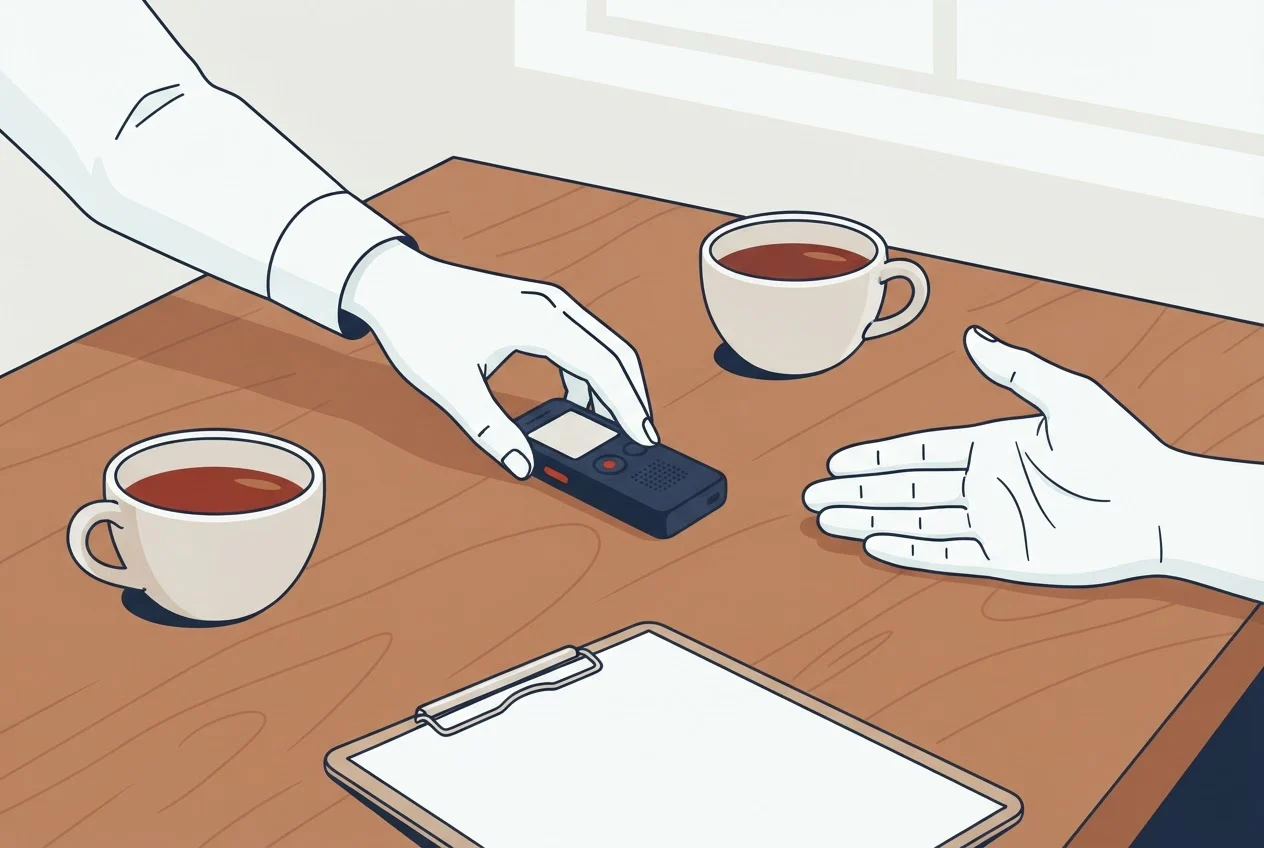
Tell every participant, before the interview starts, what the research is for, what you will record, who will see it and that they can stop at any time, then record their agreement. India's Digital Personal Data Protection Act, 2023 governs personal data, and on our reading an interview recording of an identifiable person is personal data.
The Digital Personal Data Protection Rules were notified in November 2025. As of 10 October 2026, the notified deadline for the main duties on organisations that collect data, including consent notices and security safeguards, is mid-May 2027, 18 months after notification. MeitY, the Ministry of Electronics and Information Technology, consulted in January 2026 on shortening that to 12 months, which would be mid-November 2026, but no amending notification has been published. Re-check before you rely on either date.
Section 17(2)(b) of the Act exempts research processing that is not used for decisions about an individual and that follows the standards in the Rules' Second Schedule. Check with counsel whether your study qualifies, because commercial studies often involve follow-up contact or incentives. Do not wait for the deadline to get consent right. The ICC/ESOMAR Code (International Chamber of Commerce and ESOMAR, the global body for market, opinion and social research) already sets professional standards for research.
Tests you can run before the first session
- Language: the participant can read the notice in the language of the interview. Fail: an English-only notice for a Hindi interview.
- Separate recording consent: a distinct yes or no for recording. Fail: recording buried in a general tick box.
- Withdrawal route: pass if the notice names a contact and says stopping costs the participant nothing. Fail: either is missing.
- Purpose limit: pass if the notice names the study and every use of the data, and you can show no other use. Fail: any use the notice does not name, such as marketing follow-up.
Share your interview brief with Qualfacto
Frequently asked questions
Sources
- 1.Journal of Medical Internet Research (2024): Determining an Appropriate Sample Size for Qualitative Interviews to Achieve True and Near Code Saturation
- 2.Hennink and Kaiser (2022), Social Science & Medicine: Sample sizes for saturation in qualitative research
- 3.Guest, Bunce and Johnson (2006), Field Methods: How Many Interviews Are Enough?
- 4.Nielsen Norman Group: 6 Mistakes When Crafting Interview Questions
- 5.Nielsen Norman Group: User Interviews 101
- 6.MeitY: Data protection and the DPDP Act, 2023
- 7.Press Information Bureau: DPDP Rules, 2025 Notified
- 8.Chambers: MeitY plans to cut short DPDP compliance timeline (consultation of 23 January 2026)
- 9.ICC/ESOMAR Code of Conduct